


The Ultimate Guide to Stage LED Screen Sizes, Resolutions, and Pixel Pitch
Stage LED screens have evolved from simple visual backdrops into immersive storytelling tools that define modern live events. Whether you're planning a concert, corporate conference, or festival, understanding the common sizes and resolutions of stage LED screens is essential for delivering a memorable audience experience. This guide covers everything from standard panel dimensions and pixel pitch to indoor versus outdoor considerations, helping you make informed decisions for your next production.
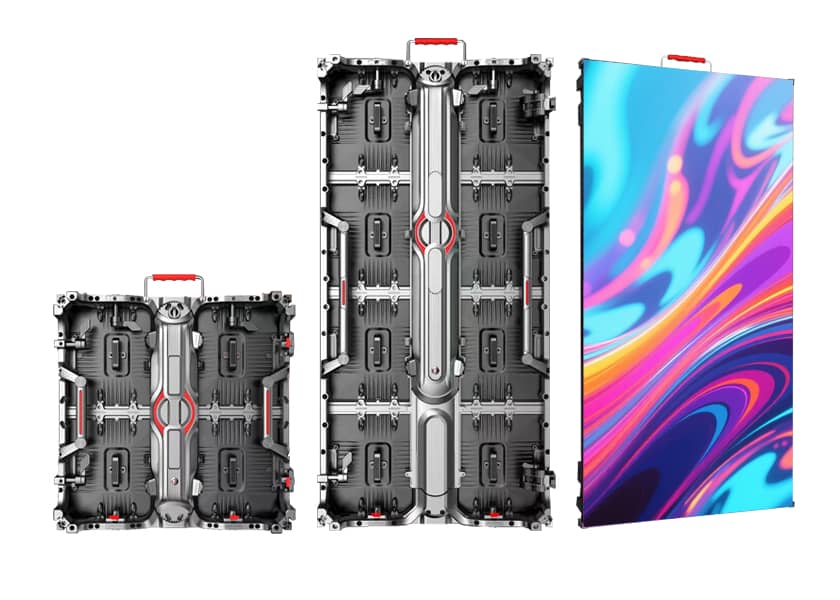
1. Understanding Standard Stage LED Screen Sizes
Stage LED screens are built using modular panels that can be combined to create displays of virtually any size or shape. The most common LED panel sizes include:
- 500x500mm – A versatile square panel widely used for rental and stage applications
- 500x1000mm – A rectangular panel that allows for creative configurations and curved installations
- 960x960mm – A larger format often used for outdoor events and stadium displays
These modular panels can be seamlessly spliced together to form everything from traditional rectangular backdrops to curved, circular, or irregular stage designs. For example, the popular P3.91 rental panels typically come in 500x500mm cabinets weighing approximately 7-8kg each, making them ideal for touring productions that require rapid setup and teardown.
2. Pixel Pitch: The Key to Image Quality
Pixel pitch refers to the distance between the centers of two adjacent LEDs, measured in millimeters. This specification directly determines the screen's resolution and optimal viewing distance:
- Smaller pixel pitch (e.g., P1.56–P2.5) = Higher resolution, sharper images, suitable for close viewing
- Larger pixel pitch (e.g., P3.91–P6.25) = Lower resolution, better for long-distance viewing, more cost-effective for large areas
Calculating Optimal Viewing Distance
A common industry formula suggests that the minimum comfortable viewing distance in meters equals the pixel pitch in millimeters multiplied by 1,000. For instance:
- P2.5 screen – Best viewed from 2.5 meters or beyond
- P3.91 screen – Optimal viewing from approximately 4 meters
- P6.25 screen – Suitable for viewing distances of 6 meters or more
For seated events where the audience is relatively close, a finer pixel pitch (P1.9–P2.5) is recommended. For large outdoor festivals where the audience is spread across a wide area, a wider pixel pitch like P3.91 or P4.81 can deliver excellent results at a lower cost.
3. Common Resolutions for Stage LED Screens
The resolution of a stage LED screen depends on both the pixel pitch and the physical dimensions of the display. Here are some typical configurations:
| Pixel Pitch | Common Application | Typical Cabinet Resolution (per 500x500mm) | Best Viewing Distance |
|---|---|---|---|
| P1.9 | High-end indoor events | 128x128 | 2+ meters |
| P2.5 | Corporate events, theaters | 104x104 | 3+ meters |
| P3.91 | Concerts, festivals | 128x128 | 4+ meters |
| P4.81 | Outdoor events | 104x104 | 5+ meters |
| P6.25 | Large outdoor stages | 80x80 | 6+ meters |
For the best visual results, stage LED screens should maintain a high refresh rate of at least 3840Hz to eliminate flicker in live video capture and camera recordings.
4. Indoor vs. Outdoor Stage LED Screens
Brightness Requirements (Nits)
One of the most critical differences between indoor and outdoor stage LED screens is brightness, measured in nits (candelas per square meter):
- Indoor screens: Typically require 500–1,000 nits, as they operate in controlled lighting environments
- Outdoor screens: Need 4,000–5,000+ nits to remain visible under direct sunlight
- Semi-outdoor applications or venues with significant ambient light: 1,500–2,500 nits may be sufficient.
Durability and Weather Protection
Outdoor stage LED screens must withstand the elements:
- IP65 waterproof rating – Protects against dust and water jets
- Temperature tolerance – Must operate reliably from -30°C to +60°C
- UV resistance – Prevents color fading and material degradation
Many rental-grade outdoor screens feature die-cast aluminum cabinets that are lightweight yet durable, with corner protection to prevent damage during transport and installation.
5. Refresh Rate and Grayscale Performance
For professional stage environments, high refresh rates and excellent grayscale performance are essential:
- Refresh rate: ≥1920Hz ensures smooth motion and flicker-free camera capture
- Grayscale: 16.7 million colors enable smooth transitions and accurate color reproduction
These technical specifications are particularly important for events that will be broadcast or recorded, as lower-quality displays can introduce visible artifacts in video footage.
6. Creative Applications and Installation Considerations
Modular and Flexible Designs
Modern stage LED screens offer unprecedented creative freedom:
- Curved installations – Panels can be configured into arcs, cylinders, or spirals
- Transparent LED screens – Allow for projections or lighting effects behind the display
- Irregular shapes – Enable unique stage designs that match performance themes
Installation and Maintenance
For touring productions and rental applications, ease of installation and maintenance is paramount:
- Front-access panels – Allow quick module replacement without disassembling the entire screen
- Lightweight design – Reduces shipping costs and setup time
- Seamless splicing – Ensures a continuous image across multiple panels
7. Conclusion: Choosing the Right Stage LED Screen
Choosing the right stage LED screen involves balancing multiple factors: audience viewing distance, venue type, content requirements, and budget. By understanding pixel pitch, brightness needs, and the capabilities of different panel configurations, event planners can select displays that deliver stunning visuals and maximize audience engagement.
Whether you're producing an intimate corporate presentation or a massive outdoor music festival, the right LED screen can transform your stage into an unforgettable visual experience.
📞 Contact Jingruns Technology today for expert advice on stage LED screens tailored to your event!
FAQ: Stage LED Screens
A: For concerts where the audience is 5-15 meters away, P3.91 or P4.81 offer an excellent balance of cost and clarity.
A: Multiply the pixel pitch (in mm) by 1000 to get the minimum comfortable viewing distance in meters. For example, P3.91 → ~4 meters.
A: Outdoor screens have higher brightness (4500-8000 nits), IP65 weatherproofing, and UV resistance, while indoor screens are lighter and have lower brightness (500-1000 nits).
A: It's not recommended. Outdoor screens are built for weather resistance, while indoor screens lack the brightness and durability needed for outdoor conditions.
A: A refresh rate of 1920Hz or higher is recommended to prevent flicker and ensure smooth video capture for broadcast or recording.